(Estimated Read Time: 11 Minutes)
Villager trading is one of the best ways to get many resources and enchantments that are otherwise hard to obtain, but how does this unique feature function in-game? Today, we explain that and much more in our
Minecraft 1.21 villager trading guide.
The Basics of Villager Trading
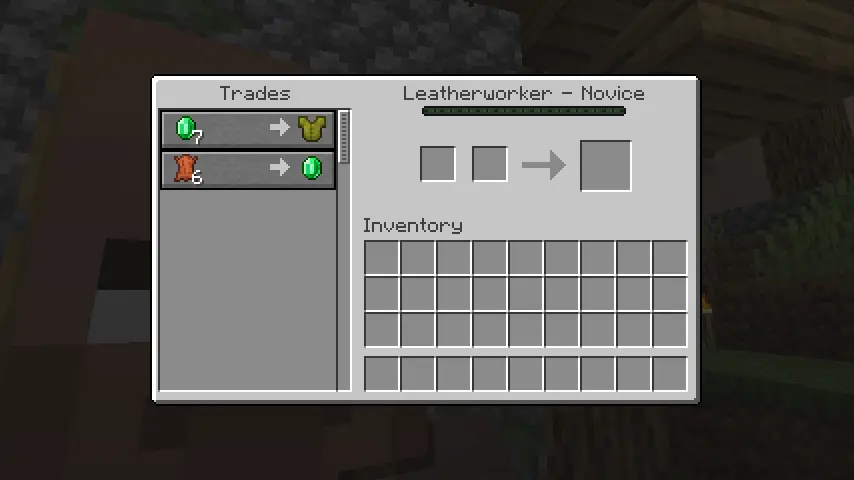
All villagers use
emeralds as a currency for buying and selling items. To begin trading, locate a village and right-click any villager with a profession to bring up the trade interface. As seen in the screenshot above, villagers have a trade level that begins at novice and can be leveled up via player trades to master, unlocking more trades.
Villagers will only perform the same trade a limited number of times before it becomes locked. During this period, no further trades of that kind can occur until the villager restocks, which happens
twice per day.
Finally, job blocks can be placed to give unemployed villagers a profession. The following section of this guide lists all possible job blocks alongside their corresponding profession’s trades. Should the goal of this visit be for mending books, we offer a separate guide called
“Mending Book in Five Easy Steps,” which focuses on that specific goal rather than the broader aspects of trading.
All Minecraft 1.21 Villager Professions & Trades
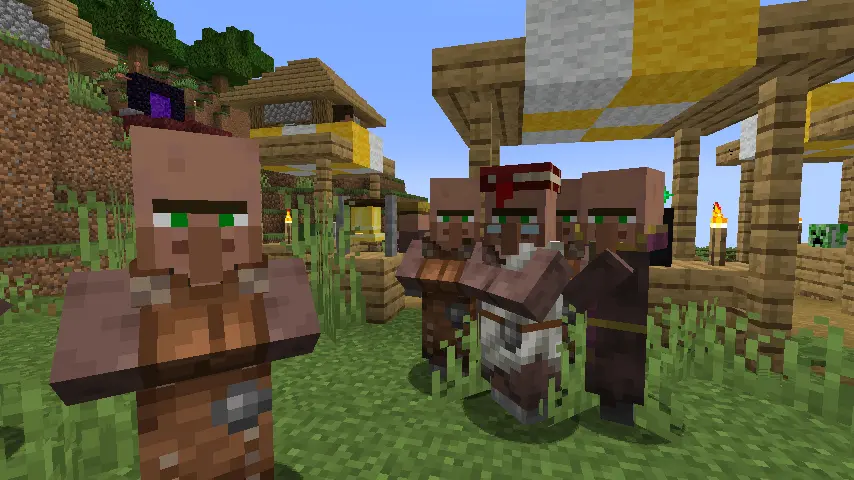 Every villager
 profession offers different trades from their respective lists below with no guarantee of what they will be. However, should a specific trade be desired, a trick can be used to reroll a villager’s initial selection repeatedly.
Simply lock an unemployed villager in a room and place a job block. The villager should then approach and take up the profession. From there, check for the
desired trade, and if not present, simply break the job block. This will remove the villager’s profession, allowing the process to be repeated until the desired trade is found. Once a villager has leveled up, destroying their job block will not make them unemployed.
Armorer
 Job Block:
 Blast Furnace
Possibly Buys:
Possibly Sells:
- Bell
- Chainmail Boots
- Chainmail Chestplate
- Chainmail Helmet
- Chainmail Leggings
- Diamond
- Enchanted Diamond Boots
- Enchanted Diamond Chestplate
- Enchanted Diamond Helmet
- Enchanted Diamond Leggings
- Iron Boots
- Iron Chestplate
- Iron Helmet
- Iron Leggings
- Lava Bucket
- Shield
Butcher
 Job Block:
 Smoker
Possibly Buys:
- Coal
- Dried Kelp Block
- Raw Beef
- Raw Chicken
- Raw Mutton
- Raw Porkchop
- Raw Rabbit
- Sweet Berries
Possibly Sells:
- Cooked Chicken
- Cooked Porkchop
- Rabbit Stew
Cartographer
 Job Block:
 Cartography Table
Possibly Buys:
Possibly Sells:
- Any Color Banner
- Empty Map
- Globe Banner Pattern
- Item Frame
- Ocean Explorer Map
- Trial Explorer Map
- Woodland Explorer Map
Cleric
 Job Block:
 Brewing Stand
Possibly Buys:
- Gold Ingot
- Nether Wart
- Rabbit’s Foot
- Rotten Flesh
- Turtle Scute
Possibly Sells:
- Bottle o’ Enchanting
- Ender Pearl
- Glowstone
- Lapis Lazuli
- Redstone Dust
Farmer
 Job Block:
 Composter
Possibly Buys:
- Beetroot
- Carrot
- Melon
- Pumpkin
- Wheat
Possibly Sells:
- Apple
- Bread
- Cake
- Cookie
- Glistering Melon Slice
- Golden Carrot
- Pumpkin Pie
- Suspicious Stew
Fisherman
 Job Block:
 Barrel
Possibly Buys:
- Coal
- Pufferfish
- Raw Cod
- Raw Salmon
- String
- Tropical Fish
Possibly Sells:
- Boat
- Bucket of Cod
- Campfire
- Cooked Cod
- Cooked Salmon
- Enchanted Fishing Rod
Fletcher
 Job Block:
 Fletching Table
Possibly Buys:
- Feather
- Flint
- Gravel
- Stick
- String
- Tripwire Hook
Possibly Sells:
- Arrow
- Bow
- Crossbow
- Enchanted Bow
- Enchanted Crossbow
- Flint
- Tipped Arrow
Leatherworker
 Job Block:
 Cauldron
Possibly Buys:
- Flint
- Leather
- Rabbit Hide
- Turtle Scute
Possibly Sells:
- Leather Boots
- Leather Cap
- Leather Horse Armor
- Leather Pants
- Leather Tunic
- Saddle
Librarian
 Job Block:
 Lectern
Possibly Buys:
- Book
- Book and Quill
- Glass
- Ink Sac
- Paper
Possibly Sells:
- Bookshelf
- Clock
- Compass
- Enchanted Book (Including Mending)
- Lantern
- Name Tag
Mason
 Job Block:
 Stonecutter
Possibly Buys:
- Andesite
- Brick
- Chiseled Stone Bricks
- Clay Ball
- Diorite
- Dripstone Block
- Granite
- Nether Quartz
- Polished Andesite
- Polished Diorite
- Polished Granite
- Stone
Possibly Sells:
- Any Color Glazed Terracotta
- Any Color Stained Terracotta
- Block of Quartz
- Chiseled Stone Bricks
- Quartz Pillar
Shepherd
 Job Block:
 Loom
Possibly Buys:
- Black Dye
- Black Wool
- Brown Dye
- Brown Wool
- Cyan Dye
- Gray Dye
- Gray Wool
- Green Dye
- Light Blue Dye
- Lime Dye
- Magenta Dye
- Orange Dye
- Pink Dye
- Purple Dye
- Red Dye
- White Dye
- White Wool
- Yellow Dye
Possibly Sells:
- Any Color Banner
- Any Color Bed
- Any Color Carpet
- Any Color Wool
- Painting
- Shears
Toolsmith
 Job Block:
 Smithing Table
Possibly Buys:
- Coal
- Diamond
- Flint
- Iron Ingot
Possibly Sells:
- Bell
- Diamond Hoe
- Enchanted Diamond Axe
- Enchanted Diamond Pickaxe
- Enchanted Diamond Shovel
- Enchanted Iron Axe
- Enchanted Iron Pickaxe
- Enchanted Iron Shovel
- Stone Axe
- Stone Hoe
- Stone Pickaxe
- Stone Shovel
Weaponsmith
 Job Block:
 Grindstone
Possibly Buys:
- Coal
- Diamond
- Flint
- Iron Ingot
Possibly Sells:
- Bell
- Enchanted Diamond Axe
- Enchanted Diamond Sword
- Enchanted Iron Sword
- Iron Axe
Wandering Trader

Wandering traders can spawn throughout the overworld, providing trading opportunities far from villages. Sadly, they do not buy items.
Possibly Sells:
- Acacia Sapling
- Allium
- Any Color Dye
- Azure Bluet
- Beetroot Seeds
- Birch Sapling
- Black Wool
- Blue Ice
- Blue Orchid
- Brain Coral Block
- Brown Mushroom
- Brown Wool
- Bubble Coral Block
- Bucket of Pufferfish
- Bucket of Tropical Fish
- Cactus
- Cherry Sapling
- Cornflower
- Dark Oak Sapling
- Dandelion
- Fern
- Fire Coral Block
- Glowstone
- Gray Wool
- Gunpowder
- Horn Coral Block
- Jungle Sapling
- Kelp
- Lily of the Valley
- Lily Pad
- Light Gray Wool
- Mangrove Propagule
- Melon Seeds
- Moss Block
- Nautilus Shell
- Oak Sapling
- Orange Tulip
- Packed Ice
- Pink Tulip
- Pointed Dripstone
- Podzol
- Poppy
- Pumpkin
- Pumpkin Seeds
- Red Mushroom
- Red Sand
- Red Tulip
- Rooted Dirt
- Sand
- Sea Pickle
- Slimeball
- Small Dripleaf
- Spruce Sapling
- Sugar Cane
- Tube Coral Block
- Vines
- Wheat Seeds
- White Carpet
- White Tulip
- White Wool
- Yellow Wool
Villager Professions Image Credit: Official Minecraft Wiki
Leveling Up Villager Professions
- Novice (Stone)
- Apprentice (Iron)
- Journeyman (Gold)
- Expert (Emerald)
- Master (Diamond)
All villagers with
professions begin at novice and level up via player trades. The progress is represented by the green bar at the top of the trade user interface, and it can be completed four times up to a total of level 5. Each time a villager levels up, it can gain up to two new trades, but what those trades end up being is never guaranteed.
To level up a villager as quickly as possible, simply complete every trade until the villager has nothing left to offer and repeat the process once their next restock is complete.
Pricing & Discounts
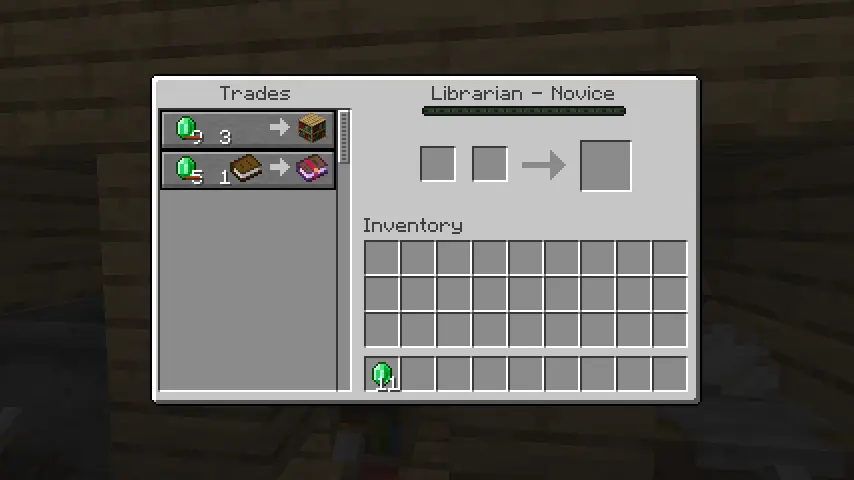
The cost of a trade is simultaneously affected by three factors: demand, the hero of the village status effect, and personal reputation.
Demand
Demand is as its name implies. Each time a trade is locked and requires a restock, the price will increase when it next returns. Similarly, a trade that does not sell out by the next restock will lower in price.
Hero of the Village
The hero of the village status effect lasts forty minutes and is given to players who defend a village from a pillager raid, granting significant discounts and better rates for all villager trades. These raids can only occur when a player with the
bad omen debuff enters a village. Bad omens are obtained by consuming the contents of an ominous bottle from trial chambers.
The hero of the village buff does not stack, but it can have different levels up to a maximum of five, with the higher levels offering better discounts.
Personal Reputation
The final factor is your personal reputation with the village and individual villagers. Higher reputations will result in more favorable prices, while lower reputations will remove discounts or even result in penalties.
Reputation with villages is temporarily raised by
curing zombie villagers, and it is lowered by harming or killing them. A villager cured by the player will always retain the maximum personal discount regardless of whether the temporary one has gone away.
Curing a zombie villager requires a few specific items and steps, which we detailed in a separate guide
here.
Minecraft 1.21 Villager Trading Hall
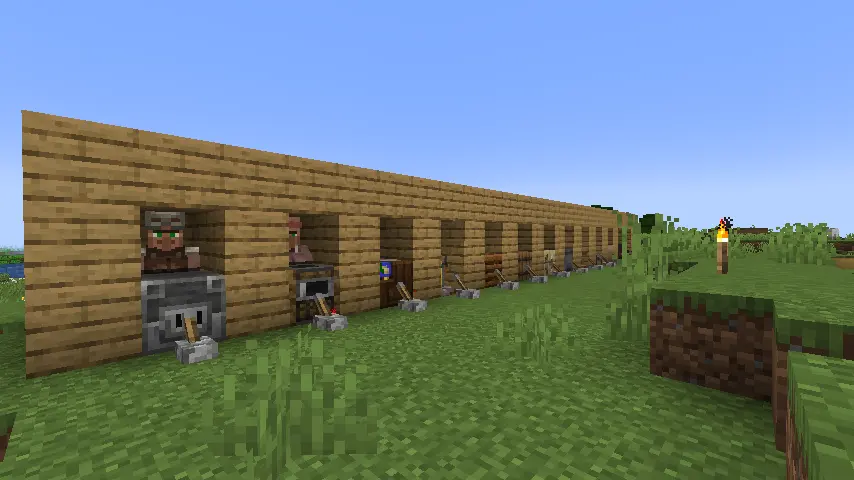
Finally, for those who would like to optimize trading to its maximum potential, there are Minecraft 1.21 villager trading halls. These player-made buildings use all the previous mechanics we described to get the best trade deals there can be, including prices as low as one emerald.
Due to the depth of this concept, we offer a separate Minecraft 1.21 villager trading hall guide found here, which provides step-by-step instructions on their setup. We hope to see you there!


 responseOkayLabel
 responsePerfectLabel
 responseLovedLabel