

Other
Farming Simulator 25 Alpaca Guide: How to Feed, Shear, Buy, Sell, Happiness, & More
Posted on by cade-davie
Alpacas are one of the new unique animals you can raise in Farming Simulator 25 thanks to the Beans & Alpacas expansion. These fluffy farm friends can give you Alpaca Fleece for selling or processing into a variety of other sellable items. But, if you're going to build an alpaca farm you need the right tools and know-how. Here, we've gathered all the info you need on building an Alpaca Shed, feeding your alpacas, shearing them, and more. Let's get farming!
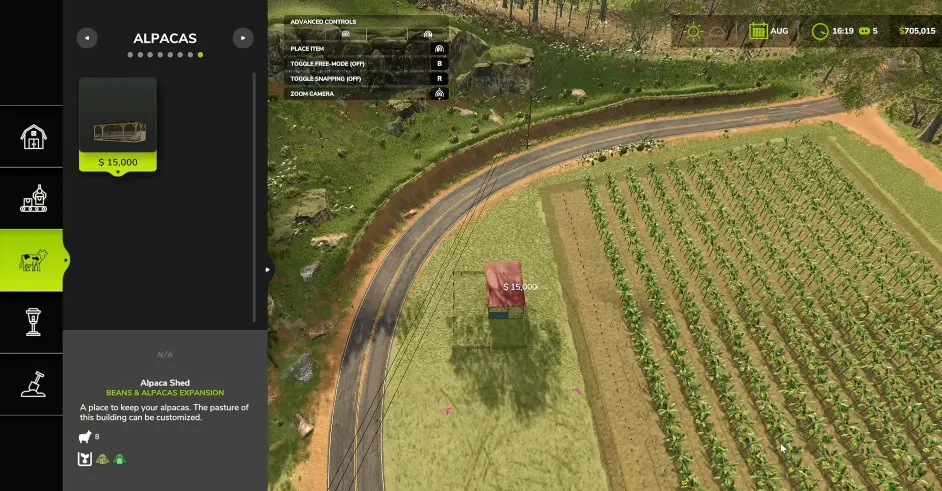 Before raising any alpacas in Farming Simulator 25, you'll need a suitable place to keep them. Open up your Construction menu and head to the Animals section to find the Alpaca Shed. This costs $15,000 before you purchase a single Alpaca or do any landscaping to prep for the shed. When you've got the capital to buy a shed, you can make some small customization tweaks as you place it.
Keep in mind that the starting capacity for an Alpaca Shed is 8 alpacas. However, you can expand it over time to house a maximum of 16. However you place it, you'll also want to make sure that the feeding area is always accessible to your herd. You'll also want to make sure you leave enough space for you to set and collect pallets of wool after a good shearing. Finally, don't always rush to fill every slot in the shed. If you leave one or two spots open, you'll be able to have some alpaca offspring, but we'll touch on that later.
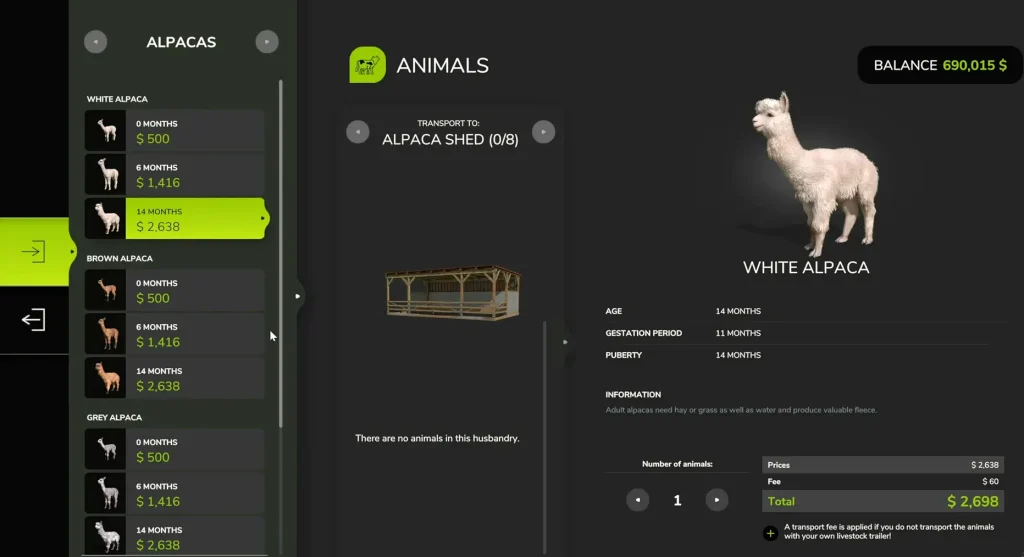 With their new home set up and ready, you can head into the animal management menu and purchase your first Alpacas. You'll have three different age groups to choose from:
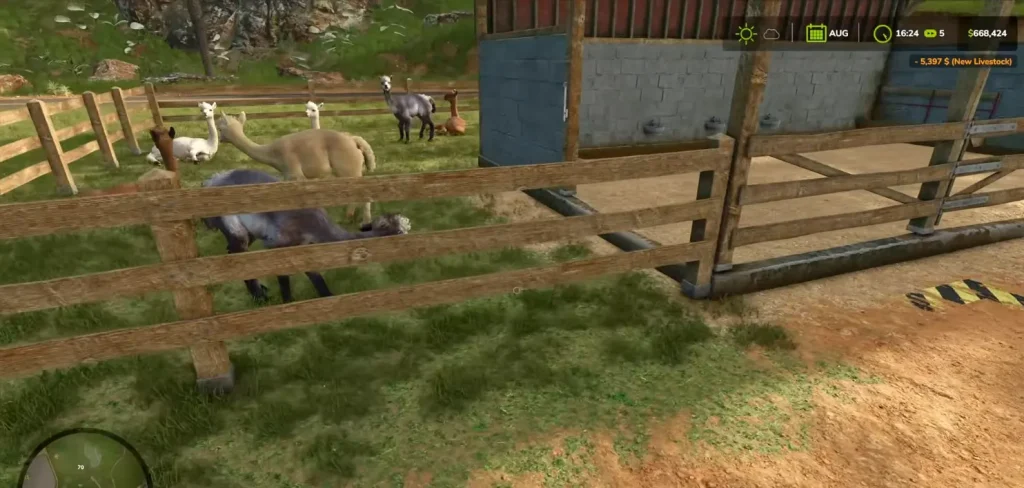 Naturally, you'll need to keep your alpacas fed if you want to sell their wool. The healthier the alpaca, the better their fleece production. When interacting with the Alpaca Shed, you'll be able to load it up with Hay or Grass. Of course, your alpacas can also eat Meadow Grass that is planted near their shed. However, each type of feed has a different level of effectiveness. The more effective the feed, the less eating they'll need to do for maximum health and fleece production. Here's how effective each feed is:
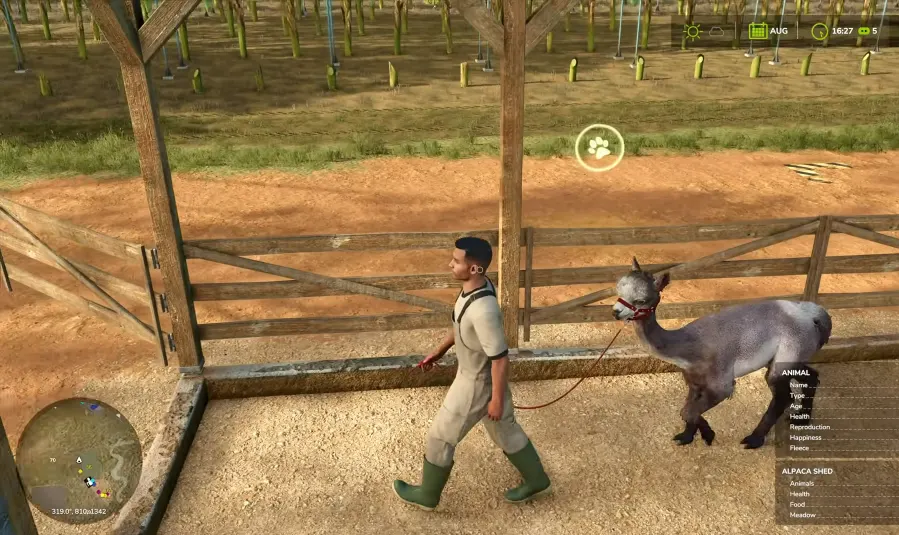 Alpacas aren't just fuzzy fleece-producing machines. They're living (digital) animals, and they need to be happy in addition to well-fed if you want the best fleece possible. This means you need to get yourself an Alpaca Leash from the Animal Hand Tools section of the shop. With it equipped, you can then interact with any of your adult alpacas to get them leashed up and ready for a walk. Doing this will increase an alpacas happiness, but keep the following in mind:
 It's finally time! You've poured money into your alpacas, and now it's time for them to do their part. First, you'll need a Shearing Tool from the Animal Hand Tools portion of the shop. Once you've bought one for $250, you can head to any of your fully-grown alpacas that have enough fleece. To see if they're ready for shearing, head into your Animal Management menu. If they're ready to go, follow these steps next:
 With plenty of pallets assembled next to your Alpaca Shed, you'll need to collect them and sell them. You'll have two options for making money with this collected fleece:
How to Build an Alpaca Shed in Farming Simulator 25
Before raising any alpacas in Farming Simulator 25, you'll need a suitable place to keep them. Open up your Construction menu and head to the Animals section to find the Alpaca Shed. This costs $15,000 before you purchase a single Alpaca or do any landscaping to prep for the shed. When you've got the capital to buy a shed, you can make some small customization tweaks as you place it.
Keep in mind that the starting capacity for an Alpaca Shed is 8 alpacas. However, you can expand it over time to house a maximum of 16. However you place it, you'll also want to make sure that the feeding area is always accessible to your herd. You'll also want to make sure you leave enough space for you to set and collect pallets of wool after a good shearing. Finally, don't always rush to fill every slot in the shed. If you leave one or two spots open, you'll be able to have some alpaca offspring, but we'll touch on that later.
How to Buy Alpacas in Farming Simulator 25
With their new home set up and ready, you can head into the animal management menu and purchase your first Alpacas. You'll have three different age groups to choose from:
- 0 Months: These are newborns that cost less initially, but take longer to reach maturity.
- 6 Months: These ones still require a bit more growth before you can start gathering wool, but they won't take as long as newborns.
- 14 Months: This is the most expensive option, but these are fully mature alpacas that can be sheared much sooner.
How to Feed Alpacas
Naturally, you'll need to keep your alpacas fed if you want to sell their wool. The healthier the alpaca, the better their fleece production. When interacting with the Alpaca Shed, you'll be able to load it up with Hay or Grass. Of course, your alpacas can also eat Meadow Grass that is planted near their shed. However, each type of feed has a different level of effectiveness. The more effective the feed, the less eating they'll need to do for maximum health and fleece production. Here's how effective each feed is:
- Meadow Grass: 60% Feeding Effectiveness
- Feeder-loaded Grass: 60% Feeding Effectiveness
- Hay: 100% Feeding Effectiveness
How to Increase Alpaca Happiness in Farming Simulator 25
Alpacas aren't just fuzzy fleece-producing machines. They're living (digital) animals, and they need to be happy in addition to well-fed if you want the best fleece possible. This means you need to get yourself an Alpaca Leash from the Animal Hand Tools section of the shop. With it equipped, you can then interact with any of your adult alpacas to get them leashed up and ready for a walk. Doing this will increase an alpacas happiness, but keep the following in mind:
- Walk, don't run. If you're too far ahead the leash can snap.
- If the leash breaks, you need to reattach it by interacting with your alpaca again.
How to Shear Alpacas
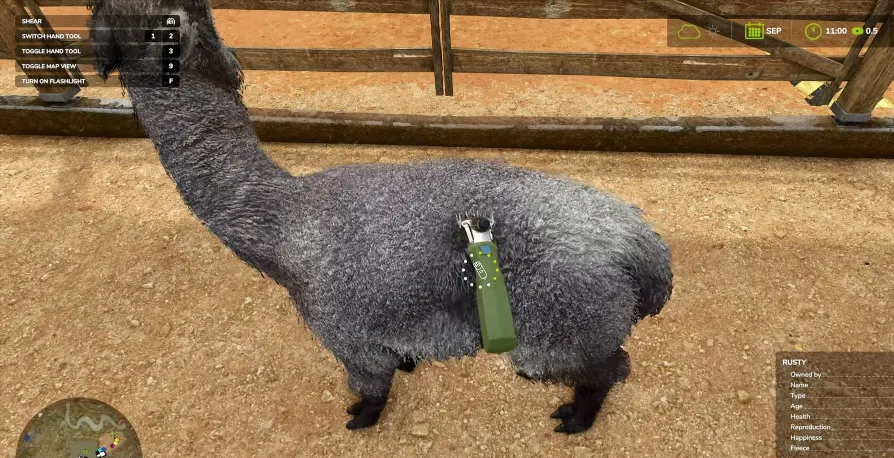
It's finally time! You've poured money into your alpacas, and now it's time for them to do their part. First, you'll need a Shearing Tool from the Animal Hand Tools portion of the shop. Once you've bought one for $250, you can head to any of your fully-grown alpacas that have enough fleece. To see if they're ready for shearing, head into your Animal Management menu. If they're ready to go, follow these steps next:
- Equip the Alpaca Leash and lead your alpaca into the designated shearing area inside the Alpaca Shed.
- Switch to the Shearing Tool.
- Use the Shearing Tool to comb over each portion of the alpaca's body.
- Collect the fleece that this creates
How to Sell Alpaca Fleece
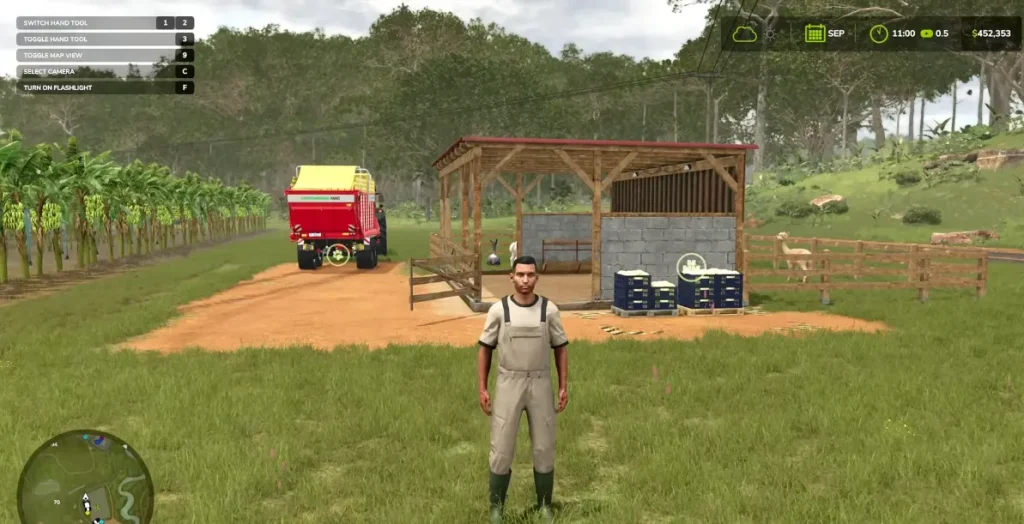
With plenty of pallets assembled next to your Alpaca Shed, you'll need to collect them and sell them. You'll have two options for making money with this collected fleece:
- Sell the Alpaca Fleece Directly: This is the straightforward option. It's also the best choice for if you're starting with a small assembly of alpacas. Load up the pallets, take them to the selling drop off point, and sell it off for a profit.
- Process Fleece into Alpaca Wool: This will require some additional investments on your part. You can take the fleece to a Spinnery and transform it into Alpaca Wool for even more production.
responseTitle
responseCount responseOkayLabel
 responsePerfectLabel
 responseLovedLabel