

The DayZ Badlands expansion sends survivors into Nasdara, a sun-scorched province where water, shade, and route planning matter as much as ammunition. This guide breaks down the map’s major points of interest (POIs), their locations, and the region’s unique systems to help you prepare for survival.
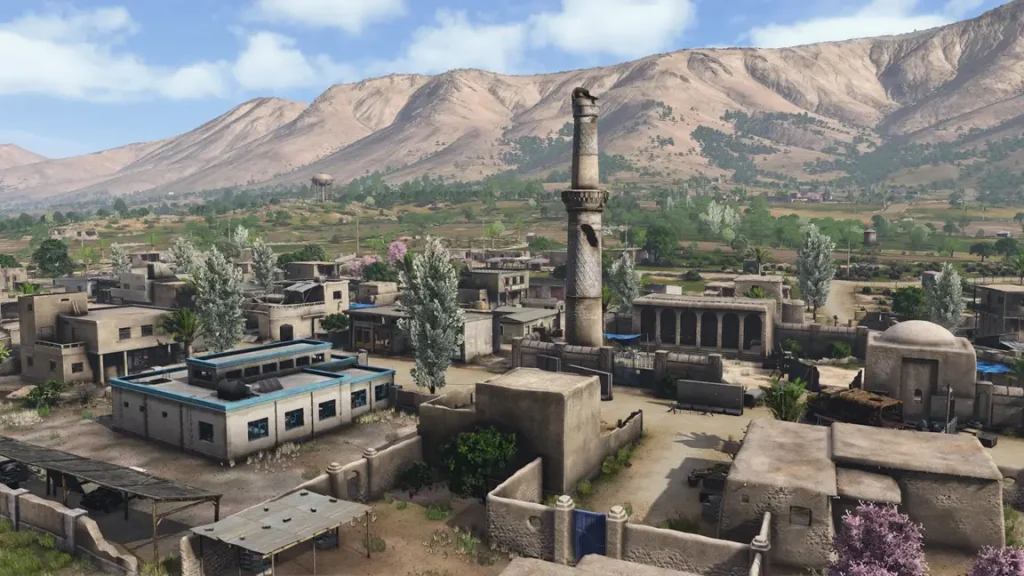 Included in the Badlands DLC, Nasdara is the largest terrain developed for this survival title to date. Spanning 267 square kilometers, this region is an arid locale that combines sprawling desert plains, ruined settlements, and abandoned infrastructure.
Unlike the woodlands of Chernarus or the frozen wilderness of Sakhal, Nasdara makes the environment itself one of survival’s most persistent threats. Freshwater is scarce, the sun can overwhelm poorly equipped survivors, and sandstorms add medical risks. Abandoned oil fields, evacuation zones, and military installations also create opportunities for players willing to venture beyond safer settlements.
Thankfully, Nasdara’s layout supports various playstyles. For instance, fresh spawns begin in the north. Then, players must make their way south, where the larger capital lies. Between these areas are different POIs, including rural towns, industrial complexes, and dangerous military locations infested with the undead.
 Nasdara shies away from the Vanilla DayZ gameplay of other official maps, especially when compared to the likes of Chernarus. Here, survivors must learn to watch out for the usual threats, like the living dead, while navigating Mother Nature’s wrath.
Below are the unique mechanics in DayZ Nasdara to help you prepare once you spawn into the map:
 Nasdara’s POIs are spread across distinct geographical locations. Although there are many, the following landmarks provide useful starting points for exploration. Whether your goal is to find military equipment or build a defensible base, these POIs deserve your attention and consideration:
What is the Nasdara Map in DayZ?
Included in the Badlands DLC, Nasdara is the largest terrain developed for this survival title to date. Spanning 267 square kilometers, this region is an arid locale that combines sprawling desert plains, ruined settlements, and abandoned infrastructure.
Unlike the woodlands of Chernarus or the frozen wilderness of Sakhal, Nasdara makes the environment itself one of survival’s most persistent threats. Freshwater is scarce, the sun can overwhelm poorly equipped survivors, and sandstorms add medical risks. Abandoned oil fields, evacuation zones, and military installations also create opportunities for players willing to venture beyond safer settlements.
Thankfully, Nasdara’s layout supports various playstyles. For instance, fresh spawns begin in the north. Then, players must make their way south, where the larger capital lies. Between these areas are different POIs, including rural towns, industrial complexes, and dangerous military locations infested with the undead.
Unique Systems in Nasdara
Nasdara shies away from the Vanilla DayZ gameplay of other official maps, especially when compared to the likes of Chernarus. Here, survivors must learn to watch out for the usual threats, like the living dead, while navigating Mother Nature’s wrath.
Below are the unique mechanics in DayZ Nasdara to help you prepare once you spawn into the map:
Water, Heat, and Sandstorms
Arguably, the first priority for any DayZ player venturing into Nasdara is water management. This region doesn’t offer the dependable water access that veterans may expect from other maps. Carry available drinks, refill containers whenever possible, and avoid long journeys without identifying your next water source. The searing heat also changes how players approach travel. Prolonged sun exposure can lead to heatstroke, and sandstorms can irritate the eyes, making traversal even tougher than expected. Carry face coverings and dust goggles, seek shelter during storms, and use shade to control heat exposure.Rebuilding Ruined Buildings
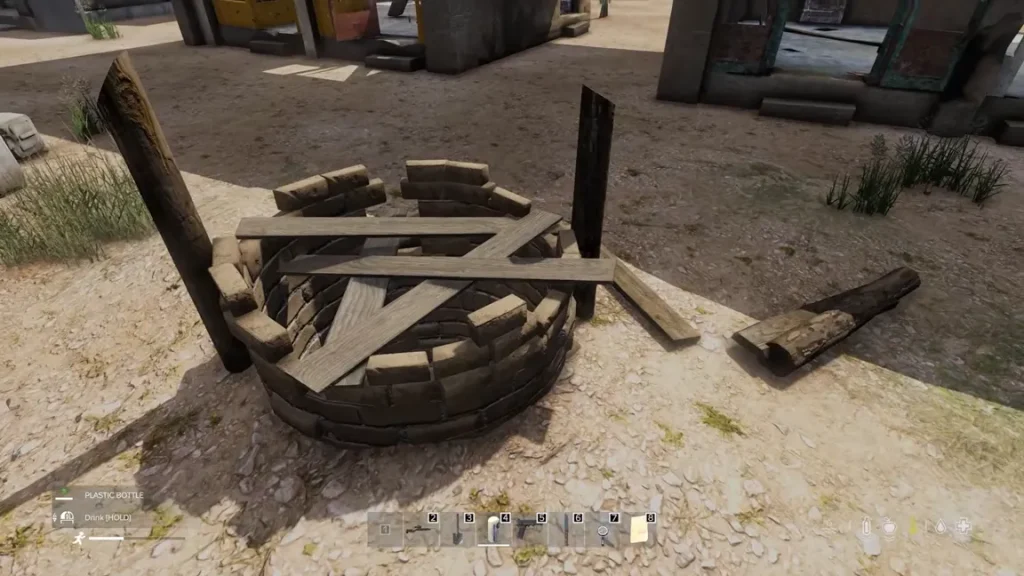
Nasdara introduces rebuilding and restoring ruined structures, a major expansion to DayZ base-building gameplay. Many damaged houses and other structures across the terrain can be repaired or barricaded, letting players turn abandoned settlements into defensible shelters. Construction requires suitable materials, including wood, bricks, mortar mix, and sheet metal, plus appropriate tools. Wells and irrigation infrastructure also create opportunities for cooperation or conflict, especially when survivors compete for access to essential resources.Motorbikes and Morse Code
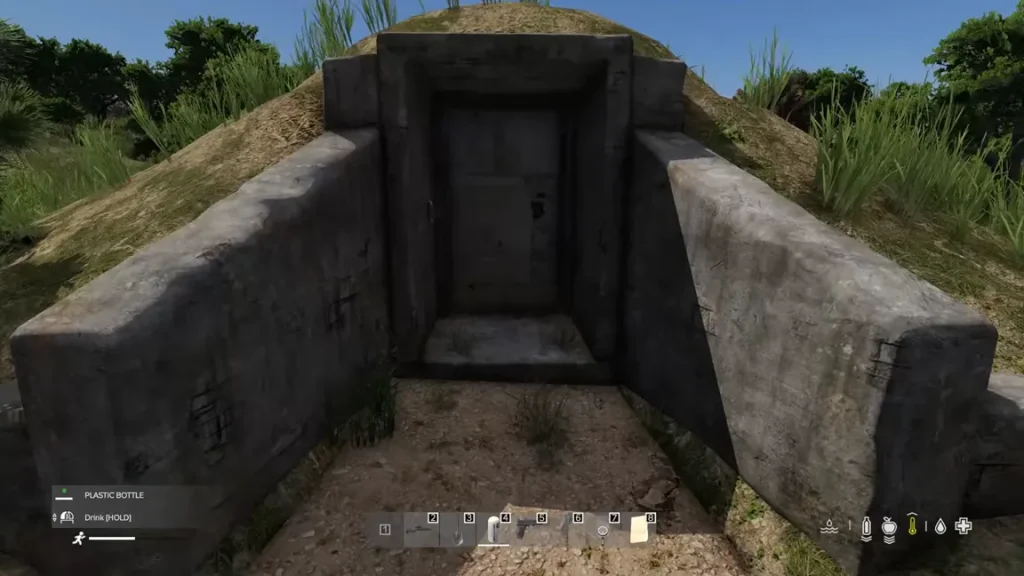
You don’t need to cross Nasdara’s harsh desert landscape on foot. This DLC introduces motorbikes, giving survivors a faster way to move around the map. Although the vehicle provides mobility and travel benefits, it requires mechanical upkeep and isn’t the quietest way to travel. Radio gameplay also gives survivors another reason to explore the map rather than stay inside a chosen base. Morse code transmissions provide coordinates and access codes linked to underground bunkers. Survivors who monitor their radios, interpret the signals, and reach the correct entrances can pursue additional loot opportunities.Nasdara POIs and Locations
Nasdara’s POIs are spread across distinct geographical locations. Although there are many, the following landmarks provide useful starting points for exploration. Whether your goal is to find military equipment or build a defensible base, these POIs deserve your attention and consideration:
Northern Spawn Areas and Sadd-e Marek Dam
Fresh characters spawn along the northern road network, like the Darvazeh-e Gharb, Jakhzar, Gandomabad, and Kamar Zir settlements. These areas are useful for learning the terrain and gathering basic supplies before attempting a longer journey south. The Sadd-e Marek Dam, in the northwest part of the map, is another major landmark. Its damaged reservoir and hydroelectric infrastructure reflect the region's water problems. Treat the surrounding terrain as a navigation reference rather than assuming the dam guarantees drinking water.Dashtabad and Dashtabad Airbase
Dashtabad is the major city in the northeast, beside the Sefid Darya. Its police facilities, workshops, garages, and surrounding streets make it worth investigating for general equipment, supplies, and urban traversal. East of Dashtabad City is an airbase with a runway, hangars, and a control tower. The military environment makes it attractive to veterans and new players searching for better equipment. However, the wide-open spaces expose approaching survivors, making loot runs into firefights.OKB-754
At the center of Nasdara lies OKB-754, a former Soviet experimental design complex. It forms part of a broader military and research cluster that includes Spets-Stvol 754, Proval-754, Baza Zenit, and the NII-Mirnyy institute. These military installations are important landmarks for players exploring Nasdara's military infrastructure. Their secluded setting may offer opportunities to search for equipment, but entering without enough ammunition, medical supplies, and an escape route is risky.Dar-e Ardis and Zulfiqar Missile Base
Dar-e Ardis marks the border crossing at the end of the M12 highway and sits on the western side of Nasdara. Like OKB-754, Dar-e Ardis features guardhouses, fenced compounds, container offices, and armories, making it a notable POI for players interested in military-style infrastructure. Farther into the western mountains, Zulfiqar Missile Base contains barracks, missile-storage facilities, fuel tanks, and garages. Its remote position can make the approach challenging, but it also gives organized groups in DayZ servers a clear objective for a military-focused loot run.Nasdara City
Located in the south, Nasdara City is this map’s capital and a major destination for nearly every survivor seeking urban exploration. The Ziarat district is especially notable for its mosque, covered bazaar, police station, and hospital. Northwest of the capital, FOB Atlas is a forward operating base with tents, watchtowers, and armories. Its proximity to Nasdara makes it a useful landmark when planning a route between urban and military locations, especially for players moving through the south.Sarman-Naft Refinery and the Fostkova Mehran Tunnel
The eastern industrial region centers on the Sarman-Naft Refinery and is surrounded by workshops, containers, and other industrial infrastructure. Damaged oil fields extend farther east, with military outposts, such as COP Neptune, overlooking parts of the region and marking it as a useful industrial and combat zone. Another location requiring special preparation is the Fostkova Mehran Tunnel, east of Bagh-e Mir along the M12. The tunnel is contaminated, so entering without NBC protection and a gas mask is dangerous. Survivors without the necessary equipment should take an alternative route.responseTitle
responseCount responseOkayLabel
 responsePerfectLabel
 responseLovedLabel